≡ Menu

Secret Behind Computer Symbols

On/Off Symbol

This symbol has its origin was first used during World War 2 as the password for the switch. Vertical lines represent the number “1” which means life or on, and the circle symbolizes the number “0” which means dead or off. While not a perfect circle that symbolizes the condition of standby.

Bluetooth Symbol

bluetoothButton on this one familiar hobby for the transfer of data from one device to another. It’s the fruit like blueberries, the 10th king of Denmark, Harald Blatand coloring one of his teeth blue. And thanks to the first receptor Bluetooth shaped like the teeth of the king, then use the usual emblem symbolizes the king Harald as its symbol.

Play Symbol

Play SymbolThere are no definite and clear story of why a triangle using that for symbolizing the play button. To be sure, the triangle is considered to be a symbol pointing toward the easiest read. Position that leads to the right reminds us of the direction of the road on cassette tape.

USB Symbol

usb symbolNeptune inspires magic wand as a symbol of USB connectors that can connect any connection. Three tip of his wand that is formed from three areas, squares, triangles, and circles so affirming when USB is a versatile connector.

@ Symbol

at symbolCurrently there are no printing presses; preacher must write the hands of each paper published. Rather than be bothered to write the word “at”, they also make symbol “t” wrapped around “a”. So be this symbol.

{ 0 comments }

Mafia Wars Game was appointed to the Movie

The success of an online game developer Zynga in making games, do not stop just at faceboook. Because one of the social gaming phenomenon Zynga, Mafia Wars on the lift to the movie and you can download old movies from some website.

But according to the Zynga, which raised the film to the big screen is not using the name as the title Mafia Wars movies, but The Green Hornet. In this superhero movie will be shown some ‘equipment’ that exists among them masks, motorcycle, gas guns, double rifles, gas masks, headgear, and garnish Hornet.

Reported by PC Magazine, on Tuesday (11/01/2011), this film will be released on January 14, and enlivened by some supporters of characters in Mafia Wars.

Previously also the style of social gaming up lifted into the movie that is Tron: Legacy. The film also successfully gets a warm welcome

Until now Mafia Wars already has 19 million users. Not long ago Dr. Dre Detox releases a single song for the album Kush, which can be enjoyed in the game Mafia Wars.

{ 1 comment }

10 Tips To Optimize Your Mac

Mac OS X is an OS that is optimal in performance. Combined in Aesthetic and minimalist make the user can wear them for hours. Although it has been optimized, the Mac can sometimes work to be slow for several reasons. The following will be given tips for optimizing the performance of OS X is used.

1. Clean Desktop

By leaving the folders on the desktop, then directly add to the burden the computer when you want to display the display screen. Indirectly, this process slows down computer performance. Create a folder called “Archive” and save all files and folder to the Archive folder.

2. Not Saving Garbage Applications

Try checking the applications already installed on your computer. How many of these applications is never used in 2 months. Uninstall applications with App Cleaner to ensure no data remains.

3. Startup Item, Slow Startup

A major factor in the slow startup is the number of startup on the computer. Check the startup items by going to System Preferences-> Accounts-> Login Items and remove from view any unwanted applications running at startup. Limit fewer than 6 for optimal performance.

4. Streamline Application

The purpose of the above words are any OS X application normally consists of two accommodation OS architecture code for older versions. So in fact the application requires only one code. To get rid of unneeded code, use xSlimmer.

5. Select One Language

In general, an application OS X also comes with several languages. Language is an option to display the application or during the installation process. If you do not use German or Japanese. Use Monolingual to get rid of language data is fairly large.

6. Widgets, Restrict Use

I do not activate Dashboard widgets are installed as each would take a computer memory resource. But sometimes widgets to simplify the workflow process. So my suggestion is to restrict the use of Dashboard widgets or turn off when not needed.

7. Activity Monitor, Your Friend

You do not need an application to monitor RAM, Memory and others. Enough with the Activity Monitor, you can monitor all the processes above. Find out process which by default runs on the computer and check which process waste your memory resource.

8. Run Only Needed

Not all features and applications in OS X you need to run each use. Turn off language translational, turn off bluetooth, and turn off internet connection even if it is not used. This case also applies to the running application. That is required only to beautify but not slow down computer performance.

9. Clean Hard Drive

Consider the data is already stored in the HDD. How much of the data is really needed. If not needed should be deleted or may be stored on external hard drive. Leave space for your computer so that the index of Spotlight also not heavy.

10. Update and Maintenance.

Always make sure the applications you use the latest version with Fresh App. After that, use Onyx for maintenance every 1-2 months for your computer.

{ 1 comment }

Domain Controller Health Check Tips

How can I check domain controller health of a number of machines on the network? The following simple way we can do if we do not have a specific application servers such as Microsoft System Center Operations Manager or third party tools to check.

Always do check in Event Viewer, and see some of the events associated with the domain controller, replication, dns, etc..

And also do health checks on the domain controller machine, create Health_Check folder in C: or another location that you like to accommodate report the results of the checking. Health Check domain controller by running:

Dcdiag.exe /v >> c:Health_Checkpre_dcdiag.txt

This command must be done and will notify you if there are problems with DC and / or services associated with the domain controller.

Netdiag.exe /v >> c:Health_Checkpre_Netdiag.txt

This command tells if there are issues with the network components on the domain controller.

Netsh dhcp show server >> c:Health_Checkpre_dhcp.txt

This command is to reexamine the existence of a dhcp server that is authorized.

Repadmin /showreps >> c:Health_Checkpre_rep_partners.txt

This command displays all the replication of both the success and failures are made. The information obtained will be more if the engine is at once the Global Catalog.

repadmin /replsum /errorsonly >> c:Health_Checkpre_repadmin_err.txt

This order for a summary of the replication process to ensure that there are certain issues.

{ 0 comments }

Fellow, auditing the event – the event in an Active Directory domain controller is often done through the use of group Policy by modifying the Default Domain Controllers Policy and then conduct an audit activation settings are configured so that will be consistent across the domain controller.

As we have seen, a number of categories come up through the audit in group Policy. Each category has a good ability in terms of audit events, successful or failed. Categories and event types that the switch (on-enable) can be selected based on need and will appear in the Windows Security Event Log. There are 9 categories as follows:

  • Audit account logon events—This category generates an event when a user attempts to login or log out of a computer using a domain account.
  • Audit account management—This category audits the creation, change, renaming, or deletion of user accounts or groups. It also audits the setting or change of a password.
  • Audit directory service access—This category audits the attempt by users to access AD objects. Individual AD objects to be monitored must have their System Access Control List (SACL) configured to be monitored.
  • Audit logon events—This category generates an event when a user attempts to login or log out of a computer using a local computer account.
  • Audit object access—This category audits the attempt by a user to access an object, such as files, folders, registry keys, or printers, among others. Individual AD objects to be monitored must have their SACL configured to be monitored.
  • Audit policy change—This category generates an event when a user attempts to change a user rights assignment policy, audit policy, or trust policy.
  • Audit privilege use—This category audits the attempt by users to exercise the use of their assigned user rights.
    Audit process tracking—This category audits highly detailed tracking information about program activation, process exit, handle duplication, and indirect object access. This level of auditing is often employed by developers and during deep troubleshooting.
  • Audit system events—This category generates an event when a user restarts or shuts down a computer or attempts to modify system security or the security log.

Of all the categories above, there are two categories of objects that require configuration auditing SACL to activate it, namely the Audit directory service access and audit object access. For both these categories, every object to be audited must be configured. For objects such as files, right-click the file and select Properties, on Security tab, click Advanced, then on the Auditing tab bring up a dialog box that is used to configure the user anywhere and everywhere access type to be audited.

Another problem arising from the above 9 categories in prior versions of Windows Server 2008 is the absence of a granular level required by the administrator. If we activate the Account management audit category will effectively enable all types of account management activities. If we only require an audit on user account management and do not require a computer audit account management how to do it?

With Windows Server 2008/2008 R2, 9 of the above categories broken down again to 50 audit policy subcategories. Sub-category allows precise control of the types of events that are logged into the Security Event Log.

We can see what sub category simply by running the following command from the command line:  auditpol.exe /get /category: *

Unlike his older brother, 9 categories at the beginning, the implementation is using Group Policy, the implementation of this sub-category via the command line tool:  auditpol.exe and performed on each machine / server.

For example, if we want to activate a specific subcategory, made per-command-line by using the switch /subcategory, so in case we wanted to enable its success and failure auditing only on the sub category Computer account management and User account management of the category of account management, we proceed with the following command line:

The verification process was also carried out the policy set by the command-line, as follows:

So hopefully this simple information can be useful ….

Credit:  WSS-ID

{ 0 comments }

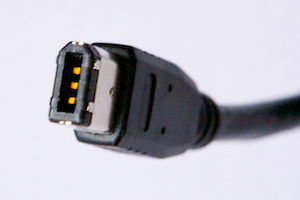
Introduction to the Firewire

firewireFireWire is a trademark of Apple is at once the most popular name for the standard data cable serial interface IEEE 1394. Sony introduces i.LINK IEEE 1394 with the name. Although the name is different, all three (FireWire, IEEE 1394 and i.LINK) both refer to types of data cables that can transmit data at speeds very quickly, until at an average of 400 megabits per second (Mbps). Conductor channel FireWire data claimed as the fastest and stable among other channels such as USB.

Development Firewire

The new generation of FireWire is born with the advent of FireWire 800 (IEEE 1394b), which Apple introduced in 2003. FireWire 800 has doubled the speed of the IEEE 1394 predecessor (called IEEE 1934a or FireWire 400), and it can deliver data to the average speed of 800 Mbps. In addition to growing rapidly, IEEE 1394b also able to be used with a longer distance than its predecessor. A FireWire 800 cable to provide cable lengths between the computer-to-tool and tool-with-tools to the max as far as 100 meters, while the optical repeaters FireWire 800 can even plug in as far as 1000 meters. But however, the speed and distance that can be pursued still depends on the type of cable used.

FireWire has been used as one of the standard connection interface between digital audio-visual equipment with computer, such as digital cameras and digital video cameras. Products that use FireWire technology usually provide a process that requires high-speed connection. For example for example in the use of external hard drives, printers and scanners, webcam (for video-conferencing), an external DVD burner, transferring movies from digital video camera into the computer’s hard drive, right down to the voice recording via FireWire-based external sound card. Everything without losing performance or hangs.
Almost all computer products and the latest laptops, are now equipped with a FireWire port facilities built-in ‘. contemporary digital video cameras also use FireWire as one of the standard input-output devices since 1995.

Firewire Excellence

  • very high speed data exchange and real-time
  • are “plug-and-mix” (plug-and-play). That is, modern day operating system (e.g. Windows XP) will directly
    detect the FireWire-based devices are connected and ready to be empowered / used.
  • In performance, FireWire does not involve a computer processor memory, so it’s not so stable and easy to hang.
  • The cable connector can be removed without having to turn-off device or interfere with the performance of the host computer (hot swapping).
  • Able to connect and recognize up to 63 FireWire-based devices simultaneously, without disturbing the performance of one-another.
  • Can be used even without having to connect to the computer-even-as a mediator, for example when using a scanner and printer (peer-to-peer).
  • Cord can carry up to 45 watts of electrical energy that we can summarize the use of cables.
  • Capture images from a camcorder with a perfect and
  • The line-free noise (noise-free), which is used as a standard tool of modern recording studio.
{ 0 comments }